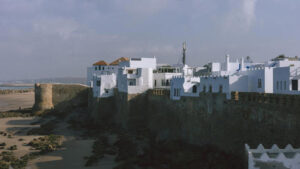
When the sun sets, silence reigns. The nights in Assilah are free from the tourist groups that explore its picturesque corners during the day. Near the waves, salt spray flies into the air with each crash against the rocks. A group of young women chat at the end of the breakwater. Their voices and the sea, nothing else.
Assilah, known in ancient times as Zilil, was founded by the Phoenicians, who established a port there to facilitate trade in the Mediterranean. The geostrategic importance of this Moroccan enclave grew from the 15th century onwards, when the Portuguese took it in 1471. During this period, the city was fortified and became a key trading centre on the route to the Azores and other destinations in Europe and Africa. After the expulsion of the Portuguese in 1589, Assilah passed into Arab hands, and the city was completely fortified under the control of the Alawite dynasty.
In the 19th century, during European colonial rule, Assilah was briefly ceded to Spain, but it was after Morocco’s independence in 1956 that the city experienced a cultural renaissance. Throughout the 20th and 21st centuries, Assilah has established itself as a meeting point between Arab, Berber, Portuguese and Spanish traditions.